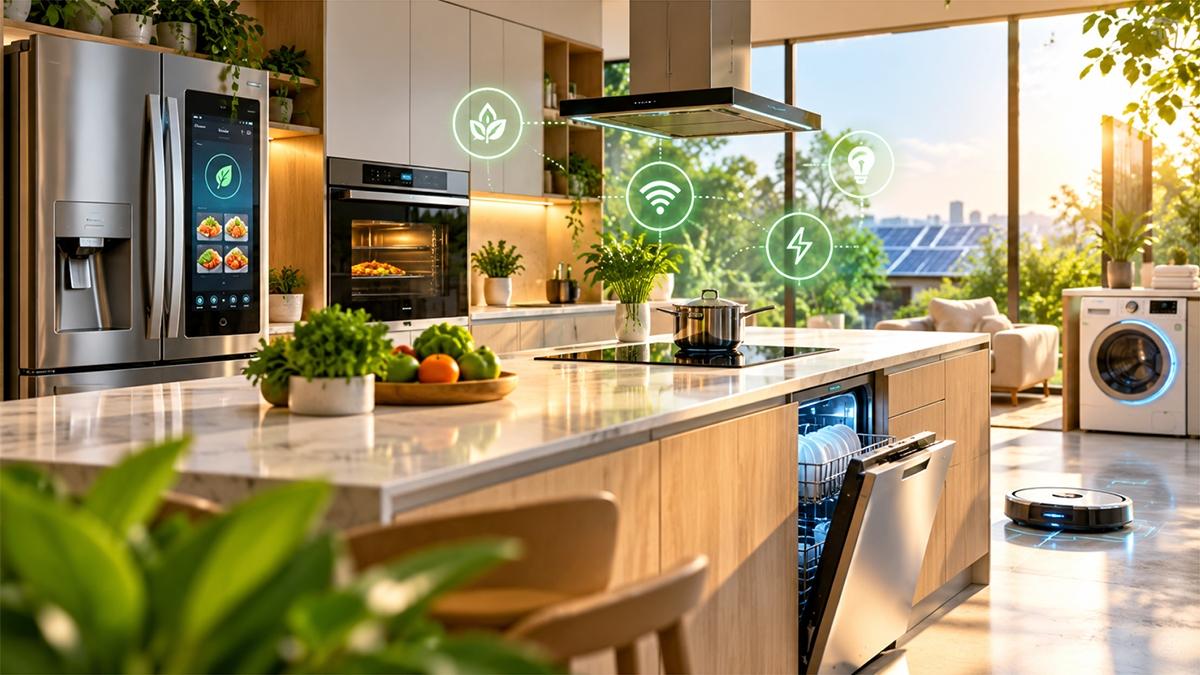
How emerging technology is helping tomorrow's households save energy, reduce waste, and live more sustainably.
What if your refrigerator could help you waste less food, your washing machine knew exactly how much water to use, and your air conditioner could automatically adjust itself to save electricity? The future of home appliances is already taking shape - and it's smarter and greener than you might expect.
For decades, household appliances have been designed to make our lives easier. Washing machines replaced hours of handwashing, refrigerators transformed food storage, and dishwashers made cleaning up after meals far more convenient. Now, the next generation of appliances is promising something even bigger: homes that don't just work smarter but also consume fewer resources.
From artificial intelligence to renewable energy integration, emerging technologies are changing how appliances operate - making sustainability an increasingly important part of modern home design.
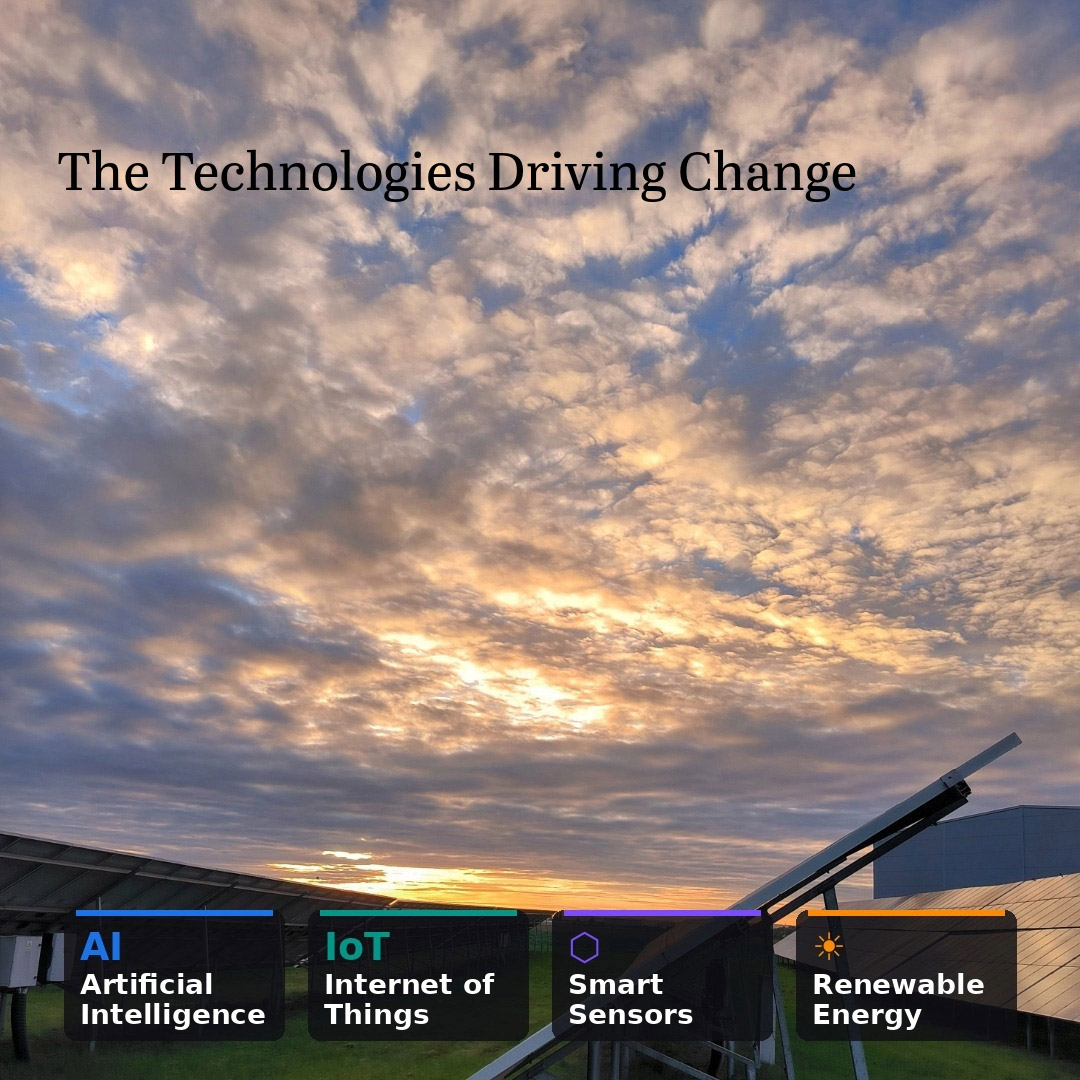
The Technologies Driving Change
When we think about futuristic appliances, robotic chefs and touchscreen refrigerators often come to mind. But some of the most meaningful innovations may be less dramatic - an appliance that adjusts its energy consumption based on electricity demand, or a washing machine that calculates the precise amount of water needed for each load.
These innovations are becoming possible through four key technologies:
- Artificial intelligence (AI) - allows appliances to recognise patterns, learn preferences, and optimise their performance over time.
- Internet of Things (IoT) - connects appliances to networks, enabling communication, remote monitoring, and coordinated operation across the home.
- Smart sensors - detect conditions such as temperature, moisture, occupancy, and load size to improve efficiency without manual input.
- Renewable energy integration - helps households coordinate appliance use with solar power and other cleaner energy sources.
Together, these technologies could help create homes that are more responsive, efficient, and environmentally conscious. However, smarter doesn't automatically mean greener - the real environmental benefits depend on how effectively these technologies reduce resource consumption throughout an appliance's lifespan.
8 Appliances That Could Make Future Homes Greener
The next generation of home appliances isn't just about adding more features. It's about rethinking how everyday household tasks can be completed using fewer resources.
AI-Powered Refrigerators That Help Reduce Food Waste
Equipped with cameras, sensors, and AI-powered software, smart refrigerators may help households monitor food inventory, track expiration dates, and suggest recipes using ingredients already on hand. Future improvements could also optimise compressor operation and temperature control to reduce unnecessary electricity consumption.
Green advantage: Less food waste, more efficient cooling, and better household food management.
Smart Washing Machines That Know Exactly What Your Clothes Need
Not every load of laundry requires the same amount of water, detergent, or washing time. Using load sensors and automated controls, smart washing machines can already adjust water levels and cycles. Future models could become even better at identifying fabric types, estimating soil levels, and coordinating cycles with off-peak electricity tariffs or periods when solar energy is available.
Green advantage: Reduced water consumption, optimised detergent use, and more energy-efficient laundry cycles.
Next-Generation Heat Pump Dryers That Reuse Heat
Clothes dryers can be among the more energy-intensive appliances in a household. Heat pump dryers offer a more efficient alternative - instead of continuously generating heat, they use a refrigeration-based system to recover and reuse heat during the drying process. Future improvements could make these dryers faster, more affordable, and better at adjusting cycles to different fabrics, with moisture sensors stopping the cycle precisely when clothes are dry.
Green advantage: Lower electricity consumption compared with conventional dryers, and potentially gentler fabric care.
Intelligent Air Conditioners That Cool Only When Needed
With occupancy sensors, weather information, and connected controls, future cooling systems may automatically adjust temperatures according to household routines and environmental conditions. Rather than running at unnecessarily high output, advanced systems could optimise cooling while maintaining comfort - and integrate more closely with home energy management platforms.
Green advantage: Reduced unnecessary cooling, improved energy management, and potentially lower electricity bills.
Smart Dishwashers That Use Water More Wisely
Advanced sensors may assess how dirty dishes are and adjust water temperature, cycle duration, and water volume accordingly. Some of these features already exist in modern dishwashers - further developments could improve cleaning performance while reducing resource use, with connected systems scheduling washing cycles during off-peak electricity periods.
Green advantage: More efficient water use, optimised washing cycles, and reduced energy waste.
Induction Cooktops That Make Cooking More Efficient
Unlike traditional electric resistance cooktops, induction cooktops use electromagnetic fields to generate heat directly in compatible cookware - allowing heat to be transferred efficiently with less energy wasted. Future cooktops could feature more precise temperature control, improved sensors, and automated cooking assistance. For households transitioning away from gas, induction also avoids combustion emissions inside the kitchen.
Green advantage: Efficient heat transfer, precise cooking control, and no indoor gas combustion.
Smart Water Heaters That Learn Household Routines
Using programmable schedules, temperature sensors, and connected controls, smart water heaters may adapt heating operations to household routines - preparing hot water before the morning rush and reducing unnecessary heating during periods of inactivity. Heat pump water heaters take this further by transferring heat from surrounding air into water rather than relying on electric resistance heating.
Green advantage: Reduced standby losses, better heating schedules, and improved energy efficiency.
Solar-Integrated Appliances That Work with Renewable Energy
Smart home energy management systems could coordinate electricity consumption across multiple appliances - a connected dishwasher might delay its cycle until solar generation peaks, while a water heater stores thermal energy for later use. Not every appliance needs built-in solar technology to participate; compatible controls can help coordinate how and when electricity is consumed across the home.
Green advantage: Better use of renewable electricity, reduced dependence on grid power, and more flexible household energy consumption.
Beyond Smart Features: The Full Lifecycle Matters
Energy efficiency is only one part of sustainability. Even an appliance that consumes very little electricity can have a substantial environmental footprint if it is difficult to repair, manufactured using resource-intensive materials, or discarded after only a few years.
The appliances of the future may be judged not only by how intelligently they operate, but also by how long they last - and how easily they can be repaired.
Future appliance design may increasingly focus on recyclable materials, replaceable components, durable construction, and software that remains supported for longer periods. Repairability will be particularly important - if a malfunctioning sensor or electronic component can be replaced without discarding the entire appliance, households can extend product lifespans and significantly reduce electronic waste.
Will Energy-Efficient Appliances Actually Save You Money?
Smart technology often comes with a higher upfront cost. But energy-efficient appliances may reduce operating expenses over time. The actual savings depend on several factors:
- Electricity and water prices - higher utility rates make efficiency improvements more financially valuable.
- Frequency of use - appliances used daily offer greater opportunities for cumulative savings.
- Genuine efficiency improvements - a truly efficient appliance delivers benefits even without advanced connectivity features.
- Purchase and maintenance costs - higher prices, repair expenses, and subscription requirements can offset potential savings.
- Household habits - using appropriate settings and maintaining appliances properly remains essential regardless of how smart the appliance is.
Replacing an aging, inefficient refrigerator may meaningfully reduce electricity consumption. But replacing a relatively new, efficient model purely to obtain smart features may offer limited financial or environmental benefit. The smartest purchase isn't always the appliance with the most technology - it's the one that delivers reliable performance and meaningful savings over its useful life.
A Greener Home Starts with Smarter Choices
The appliances of tomorrow may not look dramatically different from the ones we use today. Refrigerators will still keep food fresh. Washing machines will still clean clothes. Dishwashers will still handle the after-dinner cleanup. What could change is how intelligently and efficiently they perform these everyday tasks.
With advances in AI, smart sensors, renewable energy integration, and sustainable design, future appliances could help households conserve resources without sacrificing convenience. But creating a greener home won't depend entirely on buying the newest technology. Choosing efficient appliances, maintaining them properly, and repairing them when faults arise will remain just as important.
The future of home appliances isn't simply about doing more - it's about doing more with less. Less energy, less water, and less waste, for a smarter and more sustainable way of living.